Measuring our environmental performance | Environment - NAB

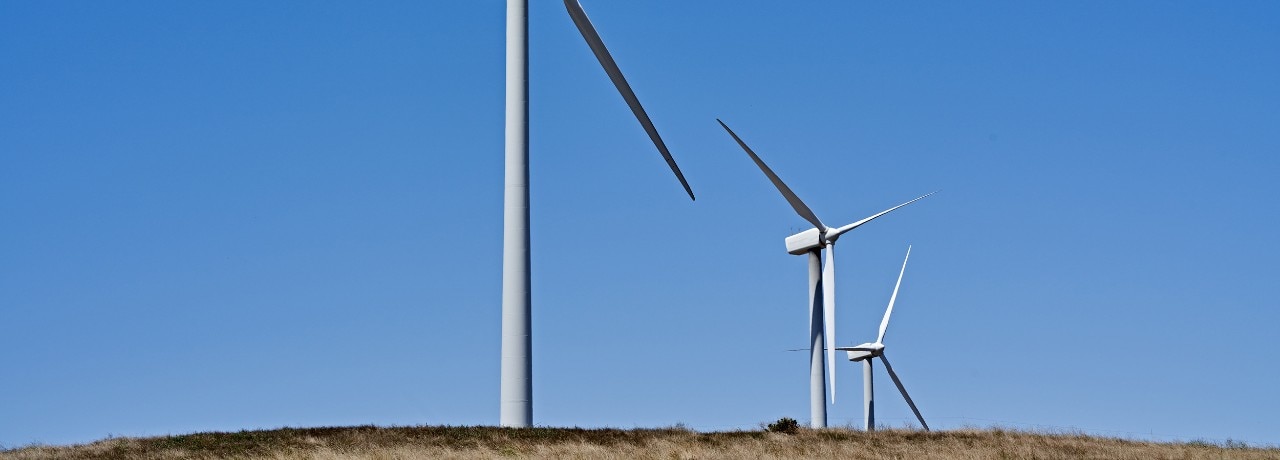
Why we measure our environmental performance
All organisations face challenges as they seek to address climate change, improve operational efficiency and use resources more sustainably.
It’s everyone’s job to reduce carbon emissions. We’re playing our part as a business while helping our customers transition too.
We’re continuing to cut emissions in our operations:
- We achieved our target to source 100% of our operational electricity from renewables in 2025 and maintained in 2026
- We have a target to reduce our scope 1 and 2 market-based greenhouse gas (GHG) emissions by 72% against a 2022 baseline by 2030.
Our environmental performance
Our environmental performance, including our operational emissions reduction target, help us progress against our ambition and be accountable for progress in reducing our environmental impact.
In 2023, we updated our operational science-based Scope 1 and 2 emissions reduction target to align our ambition to be net zero by 2050 with pathway for a 1.5°C warming scenario. Our new target is for a 72% reduction in market-based Scope 1 and 2 emissions by 2030 from a 2022 baseline and covers:
- all direct GHG emissions (Scope 1 market-based method)
- indirect GHG emissions from consumption of purchased electricity (Scope 2 market-based method) across all GHGs required in the GHG Protocol Corporate Standard.
We continue to make progress towards our environmental operational performance targets in 2025 through a combination of increased sourcing of renewable energy and improvements in energy efficiency.
You can find more information about our environmental performance targets and 2026 environmental performance in our 2026 Annual Report (PDF, 16MB) and 2026 Sustainability Data Pack.
Our assurances and certifications
We believe independent assurance and third-party validation of our performance is important. We undertake a range of annual assurance and third-party certification processes, which gives management and stakeholders confidence in the credibility of our approach and the data reported.
Learn more about our assurance process.
Regulatory reporting
NAB Group is subject to a range of environmental regulation, including reporting requirements. The key regulatory requirements are as follows:
- the Australian National Greenhouse and Energy Reporting Act 2007 (Cth) (NGER Act)
- the Streamlined Energy and Carbon Reporting requirements, which are implemented through the Companies (Directors’ Report) and Limited Liability Partnerships (Energy and Carbon Report) Regulations 2018 (United Kingdom)
- the UK Energy Savings Opportunities Scheme (ESOS), introduced by the ESOS Regulations 2014.
Further information on these regulatory requirements can be found in our 2026 Annual Report (PDF, 16MB), in the 'Environmental regulation and climate-related disclosures’ section.
Assurance of our carbon inventory
In 2026, EY conducted limited assurance over NAB’s:
- Carbon inventory in Australia, the United Kingdom, New Zealand, Asia and the United States, and the progress we are making against our Scope 1 and 2 (market-based method) Science-based GHG emissions target; and
- Carbon disclosure risk information– (i) renewable energy disclosure; (ii) project finance sector segmentation and (iii) our environmental financing disclosure.
Please refer to NAB’s 2026 Annual Report (PDF, 16MB) for these assurance statements.
Third party certification
Bank of New Zealand (BNZ) became a Toitū net carbonzero certified organisation in October 2022. You can find out more about BNZ’s sustainability performance.
Calculating carbon emissions, including financed emissions
Our carbon inventory includes greenhouse gas emissions sources from operations in Australia, Asia, New Zealand, Europe, the United Kingdom and the United States.
Work on our carbon inventory is ongoing. For some emissions sources, it’s difficult to get access to the activity data needed for accurate greenhouse gas calculations. However, we can provide a picture of the items in our inventory that have been calculated for each of our businesses.
Further information on this can be found in our 2026 Annual Report (PDF, 16MB).
The GHG Protocol Scope 3 ‘Investments’ category includes financed and facilitated emissions, which are outside NAB’s operational reporting boundary and therefore excluded from our organisational footprint. NAB has set sector decarbonisation targets and goals for financed emissions.
For more information on this approach, refer to the 2026 Annual Report (PDF, 16MB).
-
NAB has adopted the ‘operational control’ approach to establishing its operational emissions reporting boundary. More specifically, in Australia and the UK, the boundary requirements for most Scope 1 and 2 emissions are covered by the regulatory requirements of the National Greenhouse and Energy Reporting Act 2007 (Cth) (Australia) and the Streamlined Energy and Carbon Reporting (SECR) requirements which are implemented through the Companies (Directors’ Report) and Limited Liability Partnerships (Energy and Carbon Report) Regulations 2018 (United Kingdom).
Using these regulatory reporting requirements to define our Scope 1 and 2 emissions and boundaries for reporting helps enable us to meet our compliance obligations and ensures we are aligned with our regulatory reporting requirements.
-
We assess the relevance of Scope 3 emissions associated with our direct operations. Information on the Scope 3 categories included and excluded from our operational emissions boundary is available in the Supporting information section of the 2026 Annual Report (PDF, 16MB).
-
We’re connected to all parts of the economy through our lending and other banking activities and have an important role to play in financing the low-carbon transition.
Refer to ‘Metric targets and goals’ in NAB’s 2026 Annual Report (PDF, 16MB) for details on our financed emissions, and ‘Methodology Appendix’ for NAB’s methodology, including the complexities and limitations involved in measuring financed emissions.
Our approach to offsetting
The Group first avoids and reduces greenhouse gas emissions associated with NAB’s operational Scope 1, 2 and 3 emissions (excluding financed and facilitated emissions) and then offsets to match its operational emissions footprint.
NAB's global operations are audited annually as part of NAB’s annual reporting process. BNZ is a Toitū net carbon zero organisation certified and separately purchased offsets through Toitū towards meeting its certification requirements for BNZ operations.
The Group purchases quality accredited carbon offsets to neutralise remaining emissions. NAB maintains a Group Environment Reporting and Offset Management Policy (PDF, 376KB) to guide the purchasing and retirement of offsets.
The portfolio included Australian Carbon Credit Units (ACCUs) and international offsets certified under the Gold Standard and Verified Carbon Standard. BNZ purchased carbon credits for residual emissions, these were sourced from the NZ Carbon Farm and Permanent Forest NZ projects.
Read more climate news
Learn how we’re working to be part of the climate solution on NAB News.
Explore sustainability at NAB

Climate change
We’re taking steps to address climate change.
Natural capital and managing our environmental impact
Learn how we work to reduce our direct environmental impact and protect natural resources when making business decisions.

Environmental products and services
Learn about the products and services we offer to help customers decarbonise and improve environmental outcomes.
Contact us
Use our Customer Support Tool
Solve problems quickly online with our easy-to-follow guides. Simply select a topic and we’ll direct you to the information you need.
Message us online
NAB Messaging is available to answer your questions in a secure environment.
- Log into NAB Internet Banking or the NAB app.
- Select the NAB Messaging icon.
- Select Start Conversation.
Stay in touch on social media
Connect with our social profiles online.
Important information
Apologies but the Important Information section you are trying to view is not displaying properly at the moment. Please refresh the page or try again later.