How Dr Simon Skalicky is taking glaucoma testing global - NAB

23 November 2026
Health
Using technology to transform patient care
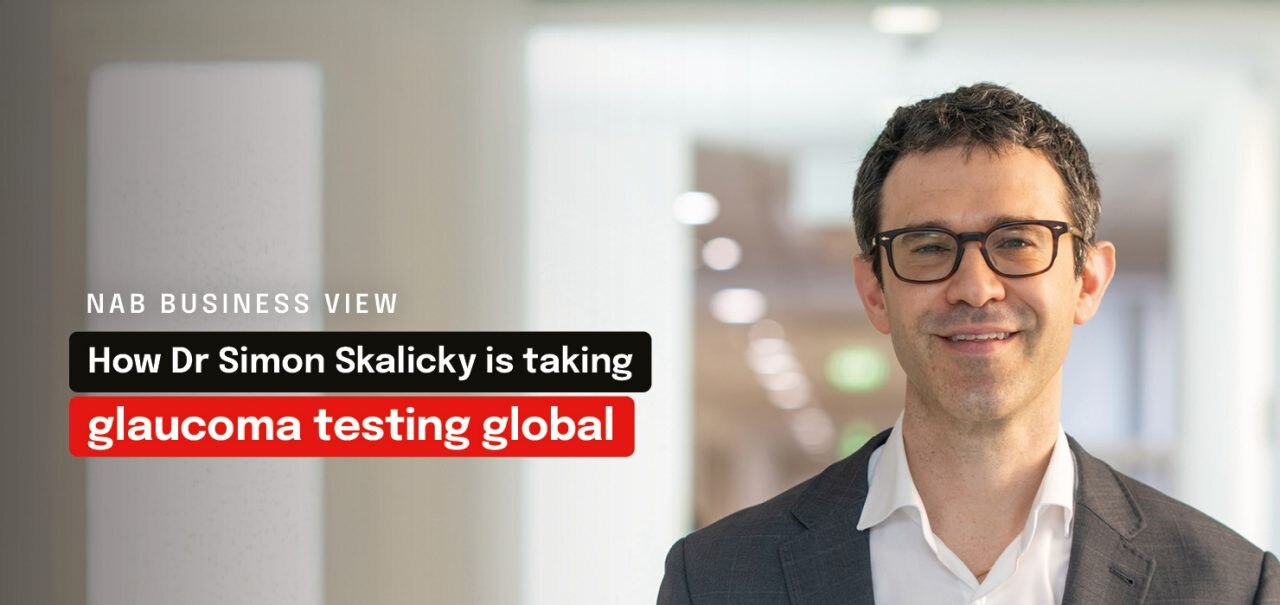
As a specialist ophthalmologist, Associate Professor Simon Skalicky has saved the sight of thousands of patients with glaucoma. Now, as the inventor of Eyeonic, he’s using technology to help save the sight of thousands more.
Glaucoma is a major global health challenge. In 2020, it left 3.61 million people blind and almost 4.14 million visually impaired. While early treatment can often stop or slow its progress, glaucoma rarely causes symptoms in its early stages. By the time they appear, the damage can already be irreversible.
“Regular visual field testing is critical to early detection of glaucoma and effective ongoing management,” Dr Skalicky says. Historically, however, it has required machinery so big and bulky it’s limited to clinics and optometry practices. “This is an access barrier to effective glaucoma screening and monitoring. Access is often even more limited outside major population centres and in resource poor nations.”
That’s the problem Eyeonic is designed to solve. Dr Skalicky’s pioneering cloud-based, AI powered platform can turn any computer with an internet connection into a tool for detecting glaucoma – potentially making testing accessible to people almost anywhere in the world.
How do you turn an idea into a global business?
Since its launch in 2020, Eyeonic has won numerous technology and business awards. Most recently, Dr Skalicky was one of just four finalists in the Innovators Den at the European Society of Cataract and Refractive Surgery iNovation Day 2026, where pioneers in eye care from around the world presented new technologies to a panel of international judges.
But the real measure of Eyeonic’s success is in its growing reach. Now a thriving commercial enterprise, Eyeonic has already been used for 50,000 tests in over 25 countries, supported by a team of eight dedicated staff, three board members and a network of external salespeople around the world. Medical students and junior and senior doctors in Australia and abroad also contribute to the associated research.
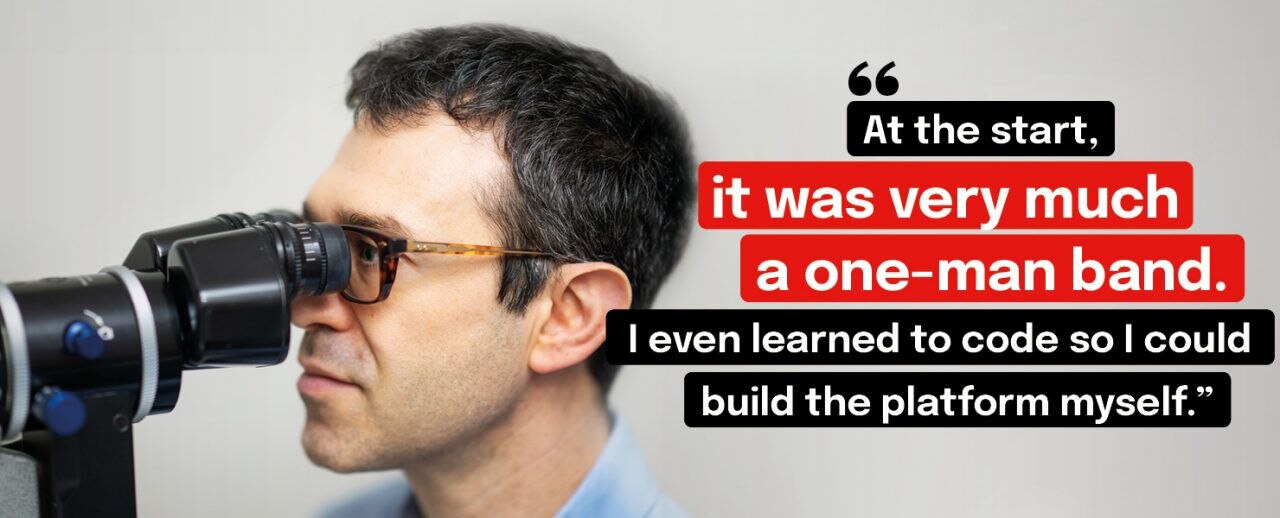
Turning an innovative idea into a global business, however, took persistence – and a willingness on Dr Skalicky’s part to do much of the early work himself. “At the start, it was very much a one-man band,” he says. “I even learned to code so I could build the platform myself.”
Bringing Eyeonic to market also required significant capital investment. Initially, Dr Skalicky drew on his own resources. “I had strong belief in this idea, but I had to use my own money to get us off the ground. Thanks to NAB’s help, I had the backing and confidence to do that,” Dr Skalicky says.
Beyond Eyeonic
Dr Skalicky still finds time to share his skills and experience in a number of ways.
A consultant at the Royal Victorian Eye and Ear Hospital and Associate Professor at both the University of Sydney and the University of Melbourne, he teaches ophthalmic physiology and trains medical students, registrars and fellows to assess patients clinically, perform surgery and carry out research.
His own research has resulted in the publication of more than 70 articles in international journals. He also serves on the editorial board of the Journal of Glaucoma, is Past President of Glaucoma Australia and is actively involved in the World Glaucoma Association.
Following the success of his textbook on ocular and visual physiology, he was also appointed Head Examiner of Physiology for the College of Ophthalmology in Australia and New Zealand.
“Teaching, research, clinical practice – these are all things I love to do,” Dr Skalicky says. “I also really enjoy the international aspect of my work. I’m lucky enough to have friends and research partners all round the world.”
What could the future of healthcare look like?
Dr Skalicky is a great believer in using digital tools and AI to transform healthcare and improve the way it is delivered. He believes technology has the potential to make healthcare more accessible, efficient and sustainable, particularly as demand on health systems continues to grow.
He notes that much of his practice involves seeing patients for regular checks, yet just 10 to 15 per cent of them require immediate attention. The rest simply make an appointment for another check in six or twelve months’ time.
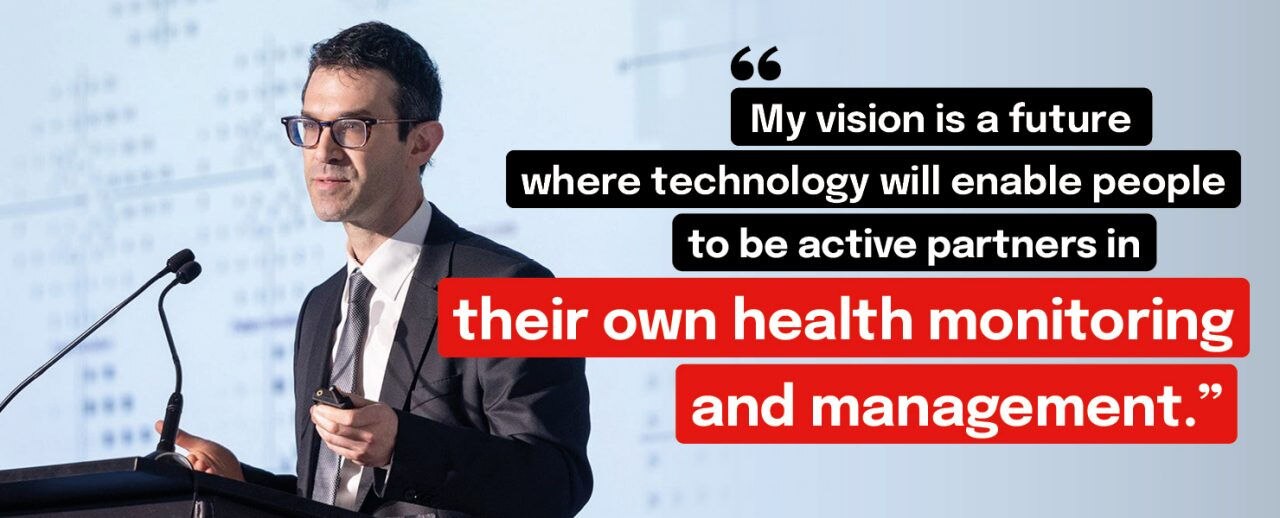
“This isn’t just about glaucoma – it applies to most chronic diseases,” he says. “My vision is a future where technology will enable people to be active partners in their own health monitoring and management. It may happen in my lifetime, it may not, but it’s one of the changes I’m working towards.”
A partner for every stage of business
Andrew Francis, Senior Health Banking Manager at NAB Health has been working with Dr Skalicky since 2015. “It’s been a real pleasure supporting Dr Skalicky’s work in every way we can,” he says.
For Dr Skalicky, having the right support has helped him pursue new opportunities.
“Having the confidence to take risks has been an important part of my story, and my ability to launch the Eyeonic project,” Dr Skalicky says. “You’re dependent on your own resources until the business is mature enough to attract funding from investors and grants.”
That relationship with NAB began well before Eyeonic.
“Both my wife and I are health professionals. We first connected with NAB health at the beginning of our careers to assist us in arranging a home loan. This can be a challenge for young graduates of the public health system. NAB helped us personally and later professionally in arranging business lending to start a medical practice. Over time as my business and banking needs evolved, NAB has been there for us. I never take that support for granted,” Dr Skalicky says.
For Andrew, the relationship has been just as rewarding.
“We have a great relationship,” Andrew says. “It’s very rewarding for me to partner with someone so approachable and down to earth who is doing such remarkable work in saving people’s sight.”