
Business conditions dropped into negative territory in August as slowing activity and persistent cost pressures weighed on businesses across the economy.
Businesses ditch diesel, green equipment surges - NAB

11 June 2026
Business banking Agribusiness Climate and Sustainability
Australian businesses are rapidly shifting away from diesel, with new NAB data showing a 32 per cent surge in demand for green equipment finance in just six months.
The shift is accelerating, with uptake in March 2026 more than double the same time last year.
Electric vehicles now dominate NAB’s green finance program, accounting for around half of all assets financed, as businesses move to reduce exposure to volatile fuel prices and supply disruptions.
Nearly 80 per cent of demand is concentrated in New South Wales, Victoria and Queensland, highlighting where the shift is happening fastest.
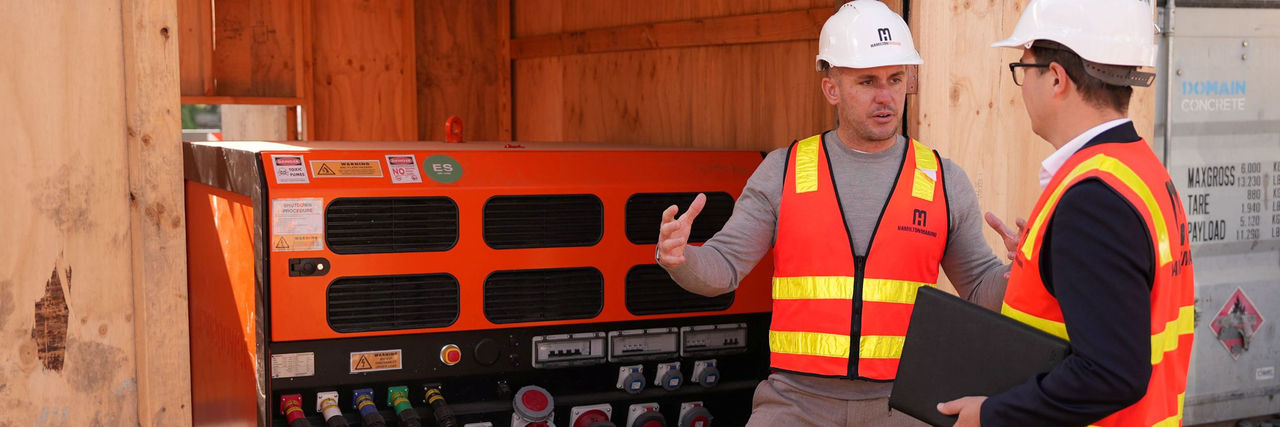
Construction firm Hamilton Marino is cutting diesel risk by switching its crane fleet to large scale battery power, replacing traditional generators.
Backed by discounted finance through NAB’s partnership with the Clean Energy Finance Corporation, the business installed a $1.6 million system.
“With fuel and other input costs under pressure, lowering expenses and protecting cashflow really matters right now,” Chris Madden, Hamilton Marino project director said.
“Battery units are more reliable than diesel, easier to move between sites and help us run operations more efficiently. The performance has been so strong we’ve already ordered four more.”
NAB said similar efficiency‑driven investments are emerging across agribusiness, with farmers increasingly adopting precision spraying technology that targets only green plants, reducing herbicide use by up to 90 per cent.
NAB banker Max Tomkinson said at a time when business conditions are tough, the bank is standing by customers to help them keep operating.
“When conditions tighten, the businesses that adapt fastest are the ones investing in resilience and that’s what we’re seeing across businesses we bank,” Mr Tomkinson said.
“Reducing diesel reliance can protect cashflow, improve reliability and keep goods moving when fuel prices are volatile. Our role is to provide the finance that helps businesses pivot quickly.”
CEFC Executive Director Richard Lovell said the partnership shows how lower emissions technologies can deliver immediate, practical benefits.
“When fuel costs are high and supplies uncertain, technologies like batteries and renewable energy can help businesses take control of their energy needs,” Mr Lovell said.
“Lower emissions and stronger resilience often go hand in hand, particularly for energy‑intensive industries.”
Notes:
NAB and CEFC launched two discounted finance programs in March 2025, backed by $300 million in CEFC capital.
In its first year, the NAB-CEFC partnership has delivered more than $130 million in discounted finance to more than 550 Australian businesses. Through the discounted interest rates, manufacturers, transport operators, agribusinesses and farmers have invested in batteries, renewable energy, electric equipment and on‑farm upgrades that cut fuel exposure while also reducing emissions.
Businesses and farmers can speak to their NAB banker to access the program.
For all media enquiries, please contact the NAB Media Line on +61 3 7035 5015