Productivity, fuel security and affordable energy key to Australia’s future: NAB CEO - NAB

9 September 2026
Economy and Markets

Key points

  • NAB Group CEO Andrew Irvine spoke at the ACAPMA Conference in Melbourne on how Australia must lift productivity to secure future growth.

  • Irvine said security is economic security and underpins national resilience.

  • He concluded that affordable energy will be critical to Australia's future prosperity.

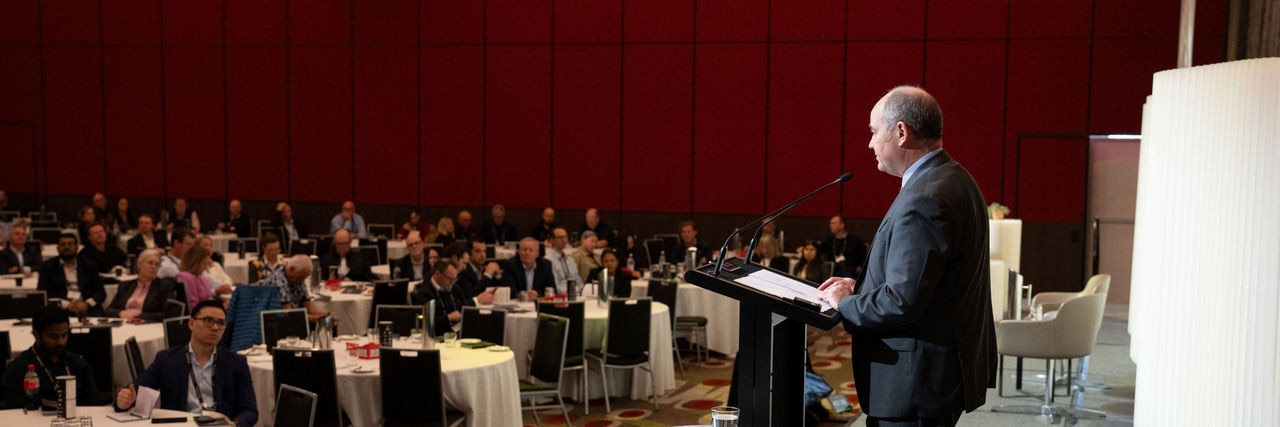
Speaking at the Australasian Convenience and Petroleum Marketers Association's (ACAPMA) 50th anniversary conference, NAB Group CEO Andrew Irvine said Australia has significant strengths but faces growing economic pressure, and that productivity, fuel security and affordable energy will be critical to the nation's future prosperity, competitiveness and resilience.

Australia faces a productivity challenge

Mr Irvine said Australia was confronting a new economic reality shaped by geopolitical uncertainty, higher costs and weak productivity growth. 

He pointed to ongoing global tensions, cost pressures and subdued business confidence as challenges facing many businesses across the country. 

While he remains optimistic about Australia's long-term prospects, Mr Irvine warned the nation risked falling behind other advanced economies without action to lift productivity and support investment. 
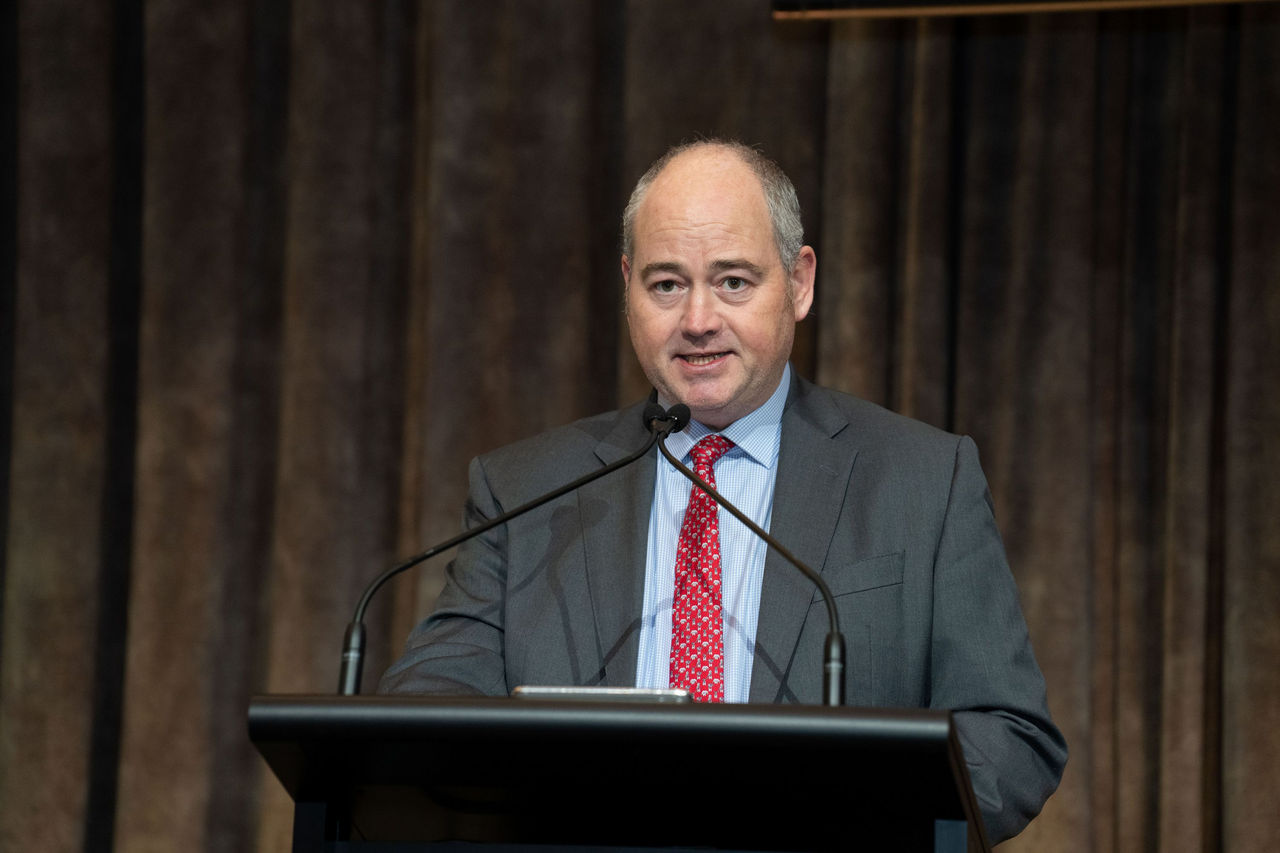
NAB CEO Andrew Irvine's opening address at the ACAPMA conference in Melbourne September 2026

"The risk now is that we are stuck in a low-productivity, low-growth trap," Mr Irvine said. 

He said Australia had significant strengths, including abundant natural resources, strong institutions, talented people and opportunities across energy, agriculture, infrastructure, technology and housing. However, unlocking those opportunities would require action to lift productivity and support investment. 

"Ultimately, we all have the same goal. That is to raise living standards and create a stronger economy for all Australians," he said. 

Fuel security is economic security

Mr Irvine said secure and reliable access to fuel remains fundamental to Australia's economic performance, particularly given the country's reliance on diesel across industries such as mining, agriculture and freight. 

He noted recent and continuing geopolitical events and disruption to global fuel markets had reinforced the importance of strengthening Australia's fuel resilience.

"Fundamentally, fuel security is economic security," Mr Irvine said. 

Mr Irvine also acknowledged ACAPMA's advocacy on fuel security.

He said strengthening Australia's ability to withstand future shocks would be important as geopolitical instability and severe weather events continue to create uncertainty. 

Mr Irvine pointed to NAB customer Redland Bay BP in Queensland following Tropical Cyclone Alfred last year, as an example of how fuel retailers support communities during times of crisis, with the service station becoming a critical hub for fuel and supplies during the recovery effort.

Affordable energy will support future growth

Turning to Australia's energy future, Mr Irvine said affordable energy would be essential to improving productivity and supporting future economic growth. 

He said Australia has the resources and capability to become an energy superpower, but more investment, infrastructure and supply would be required to ensure energy remains reliable and affordable.

" We need to do a much better job of bringing energy to market, including renewables and natural gas, as well as other liquid fuels," Mr Irvine said. 
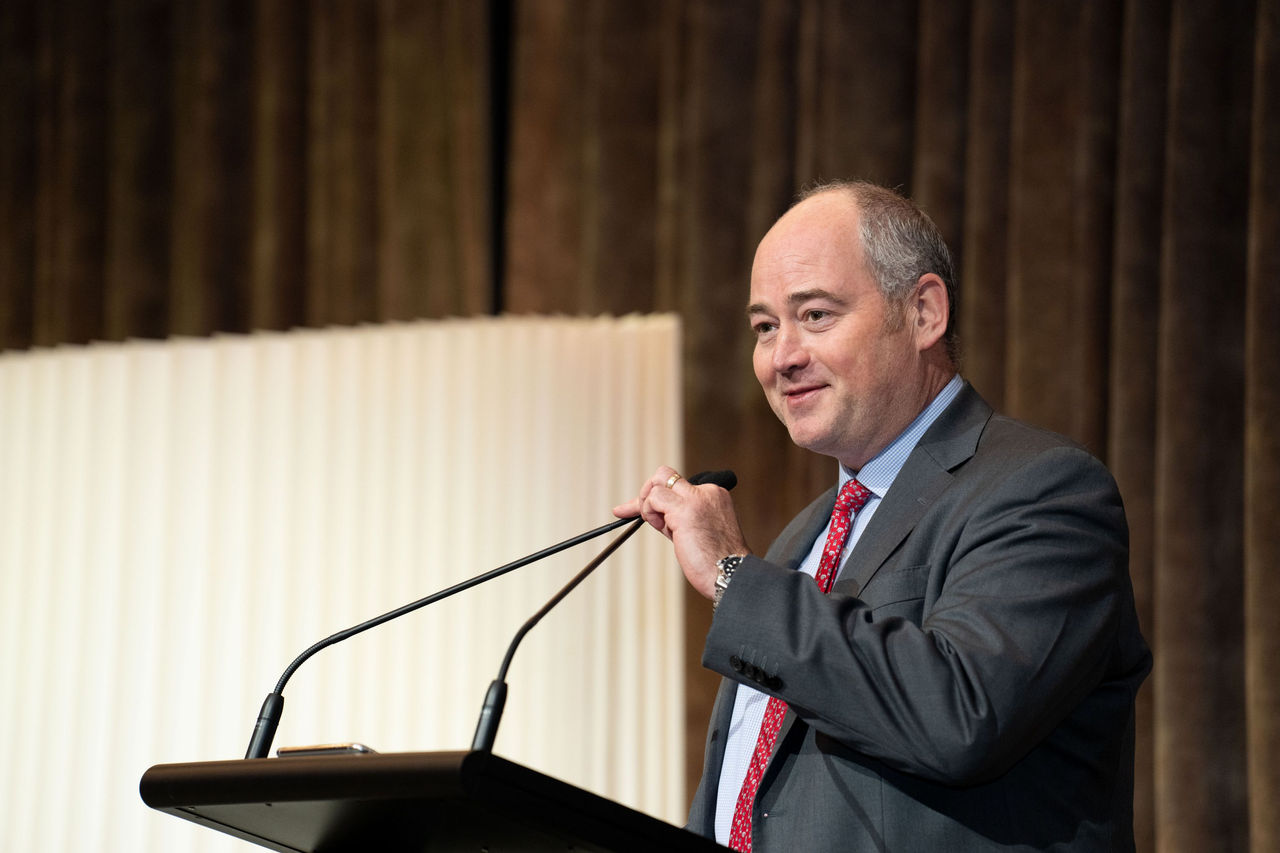
NAB CEO Andrew 's opening address at the ACAPMA conference in Melbourne September 2026

"This requires more of everything.  More investment, more infrastructure, more gas and more renewables – together with stable policy settings to ensure Australia has a global advantage cost of energy in order to ensure we can drive our nation’s prosperity.

Mr Irvine also noted that since the March fuel crisis, Australia has seen accelerated consumer interest in hybrid and electric vehicles as households and businesses look to manage transport costs and energy use.

"Your industry has an important role to play in the electrification of private and light vehicles. Particularly for urban travel I think low-cost electric options will be a game changer for many, many Australian families.

"Now at the same time, I think it’s important to be realistic. While new technologies will continue to grow, long-term demand for petrol, diesel and other liquid fuels will remain critical for Australia for many years, and likely decades to come.

"Heavy transport, agriculture, mining and regional industries cannot simply switch overnight. So getting this balance right for our country, will be a critical issue for our country to address in the years to come.

"Australia's future prosperity depends on it," Mr Irvine said. 

Mr Irvine said renewables, natural gas and liquid fuels would all continue to play a role in meeting Australia's future energy mix, while industries such as heavy transport, agriculture and mining would continue to rely on liquid fuels for years to come. 

Supporting Australian businesses

Mr Irvine said NAB remained focused on helping customers manage a challenging operating environment.

He noted the bank had contacted almost 200,000 business customers this year, particularly those most exposed to higher fuel and transport costs arising from global disruption. 

"NAB is Australia's business bank and let me be very clear, we are open for business," he said. 

Concluding his remarks, Mr Irvine said he remains optimistic about Australia's future despite current economic challenges. 
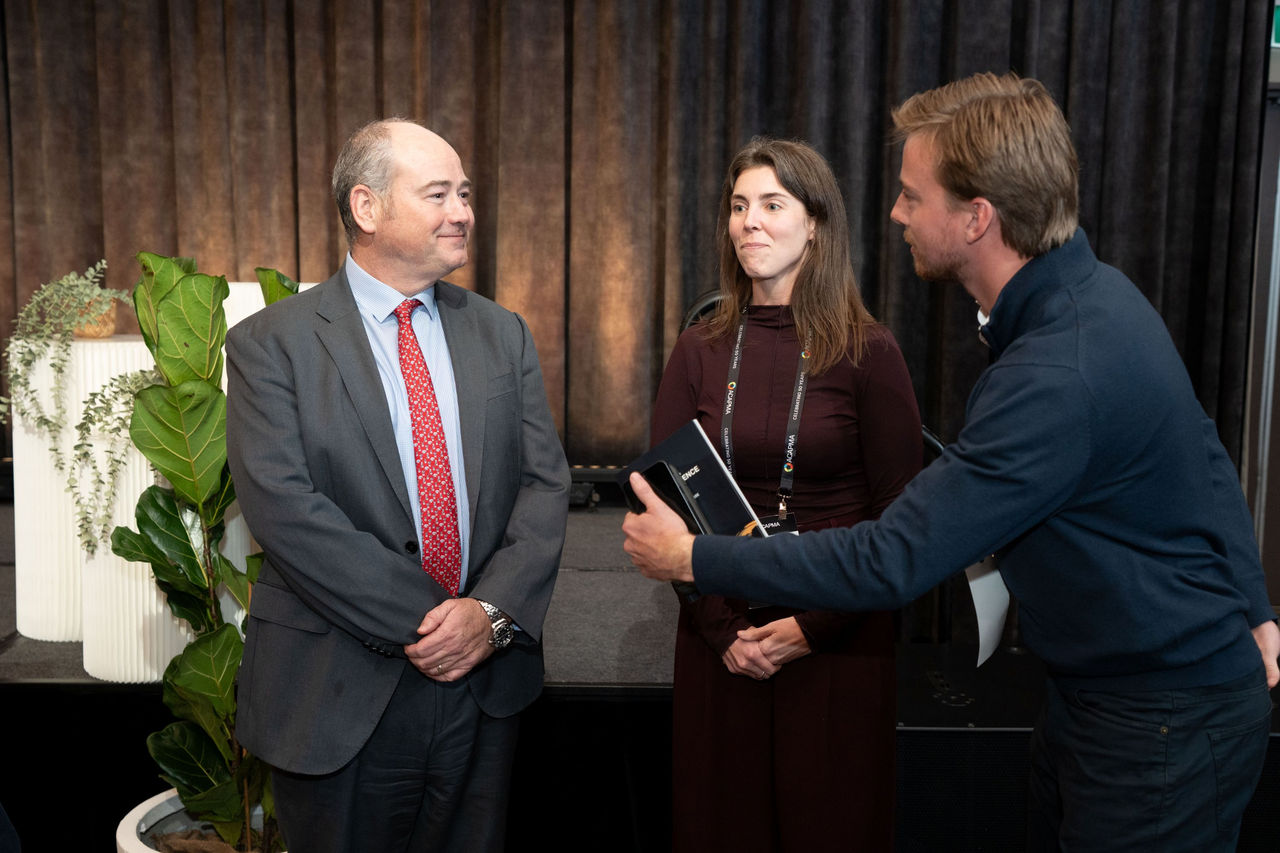
NAB CEO Andrew Irvine at the ACAPMA conference in Melbourne September 2026

"Australia has all the ingredients to be one of the best places to live and work," he said. 

"But we do need to make the right choices about productivity, investment, fuel security and energy affordability to realise Australia's future prosperity."

ACAPMA Conference 2026 –  NAB CEO Andrew Irvine opening address  - Melbourne, 8 Sept 2:00pm  

 Excerpts attributable to Andrew Irvine, NAB CEO:

 Australia's new economic reality

 “So, to our new economic reality.

 In the past year, economic fundamentals have changed faster than many of us expected.

 Geopolitical tensions continue to create uncertainty, from conflict in the Middle East to the impact of US tariffs on businesses and ongoing trade tensions.

 Fuel supply challenges have been managed reasonably well so far, but cost inflation as a result of this disruption remains persistent. This is driving input costs up for, for your clients and is making business planning more difficult.

 At the same time, higher interest rates and Federal tax setting changes are affecting property demand and property values, with a broader housing market adjustment underway.

 Compounding these pressures, Australia is experiencing one of the worst periods of productivity growth on record.

This is reflected in our NAB Business survey which shows that across the country, business confidence and business conditions are 

Through this, businesses are trying to focus on what they can control.   That is, their customers, their people, their costs and the investments that will make them stronger over time.

 Australia's long-term opportunity 

Longer term, Australia should be optimistic.

 We have the resources the world needs, abundant energy, strong institutions, leading businesses and talented people.

 And we have enormous opportunities to drive growth in energy, agriculture, infrastructure, technology and housing.

 The ingredients are there. The foundations are strong. But we're not making the most of them.

 I spoke earlier this year about the risk of what I called Peak Australia. That economic conditions were about as good as it gets.

 We were growing but without real reform we would soon hit the limits of what the economy could deliver.

 The risk now is that we are stuck in a low-productivity, low-growth trap that’s been slowly strangling Australia for decades.

 Without urgent action, we’ll continue to be locked in a slow lane as other advanced economies surge ahead.

 Consider this, today labour productivity growth in the US is twice that of Australia. In Singapore it’s more than three times higher.

 These countries combine high capital intensity, business friendly regulatory regimes, strong digital adoption and deep integration into global value chains.

 For generations, Australia delivered a simple promise: each generation could expect to do better than the one before it. That is that any parent could look at their children and have real confidence that their kids will live a better life than they did. Well, that promise is no longer a reality.

 Australians born in the 1950s consistently earned a higher average inflation adjusted income at each stage of life than people born in the 1940s. The same was true for those born in the 1960s compared with the decade before them. The same was true in the 70s. The same was true in the 80s.

 But for the first time, Australians born in the 1990s, that progress has stalled. We now have a decade of data of people born in the 90s who are in the workforce, and their average incomes are broadly no better than those born a decade earlier. And the problem is the situation is deteriorating.

 That is the stark reality of prolonged weak productivity growth.

 So my question now is: ‘is Australia prepared to do what it takes to realise our national ambition?’

 Ultimately, we all have the same goal. That is to raise living standards and create a stronger economy for all Australians.

 Fuel security is economic security

A stronger economy also depends on secure access to energy.

 This brings me to my second point: Fuel security and fuel reliability.

 Fuel retailers, distributors and suppliers play a critical role in our economy.

 You know better than anyone that Australians spend more than $300 million every single day on fuel.

 We are the highest users of diesel per capita in the world. That reflects the structure of our economy - from mining and agriculture to the vast freight networks that keep our country moving.

 Secure and reliable fuel sources are needed to keep businesses operating and communities functioning.

Fundamentally, fuel security is economic security.

 I applaud ACAPMA's contribution to this important national conversation, including its engagement with government on strengthening our domestic sovereign fuel security. 

 Now I heard a conversation recently from the prior speaker about our refinery capacity and I’m sure that many of you know twenty years ago, Australia had eight refineries. Today we have two. Australia has not built an oil refinery since the 1960s.

 And while these two remaining refineries remain an important part of our energy resilience and energy mix. On their own they are insufficient to ensure our critical sovereign capability.

 A story from Redland Bay

The importance of resilience was apparent to me when I saw a community in a crisis.

 As NAB CEO one of the greatest parts of my day is when I’m out and about with our customers.

 One memorable visit that I had was to visit a NAB customer last year in Queensland - The Redland Bay BP.

 There I met the owners, Matt and Trent, and I did that following the aftermath of the devastating Tropic Cyclone Alfred. When Alfred struck, Matt and Trent's service station became one of the only places in town with power. At a time when the community needed fuel and supplies, their business became a critical hub. They worked around the clock to serve their customers and called on friends and neighbours to keep that community moving.

 And the reason they were able to that, is that a few months before the cyclone, NAB had supported them to increase their asset finance facility to purchase two huge generators that helped them in that moment.

 It shows a practical example of business resilience, and it highlights that fuel keeps the economy moving in good times. 

 But in difficult times, fuel is a critical infrastructure.

 Affordable energy

 If I can turn now to our third topic, which is affordable energy enabling our future prosperity.  

 To lift productivity, we need more energy to support households, businesses and economic growth.

 Australia's future prosperity depends on it. And when you look at this country and the vast amounts of renewable and low carbon and natural gas resources we have, Australia should be an energy superpower.

 We need to do a much better job of bringing energy to market, including renewables and natural gas, as well as other liquid fuels.

 This requires more of everything.  More investment, more infrastructure, more gas and more renewables – together with stable policy settings to ensure Australia has a global advantage cost of energy in order to ensure we can drive our nation’s prosperity.

 Your industry has an important role to play in the electrification of private and light vehicles. Particularly for urban travel I think low-cost electric options will be a game changer for many, many Australian families.

 Close

 Throughout business cycles, in good times and tough, NAB always stays connected to our customers. NAB is Australia’s business bank and let me very clear, we are open for business. 

 To close, Australia has all the ingredients to be one of the best places to live and work. We have the resources, the talent, opportunities.

 We have businesses like yours, that create jobs and support communities. That's why despite the challenges I continue to remain optimistic.”


Related Articles

Productivity, fuel security and affordable energy key to Australia’s future: NAB CEO

Economy and Markets

Speaking at the Australasian Convenience and Petroleum Marketers Association's (ACAPMA) 50th anniversary conference, NAB Group CEO Andrew Irvine said Australia has significant strengths but faces growing economic pressure, and that productivity, fuel security and affordable energy will be critical to the nation's future prosperity, competitiveness and resilience.

09 September 2026 | 3 min read

Business conditions drop into negative territory - NAB Business Survey August 2026

Economy and Markets

Business conditions dropped into negative territory in August as slowing activity and persistent cost pressures weighed on businesses across the economy.

08 September 2026 | 2 min read

NAB Chief Economist Opening Statement to Senate Select Committee

Economy and Markets

NAB’s Chief Economist Dr Sally Auld appeared before the Senate Select Committee on Intergenerational Housing Inequity.

03 September 2026 | 1 min read

Contact us

Media Enquiries

For all media enquiries, please contact the NAB Media Line on +61 3 7035 5015