RBA surcharging changes | What you need to know | NAB - NAB


What is changing?
On 31 March 2026, the RBA published its Conclusions Paper, introducing three major changes designed to make card payments simpler, fairer and easier to understand. Together, these reforms will affect how most businesses across Australia manage card payments from 1 October 2026.
Here’s what each one means for you.
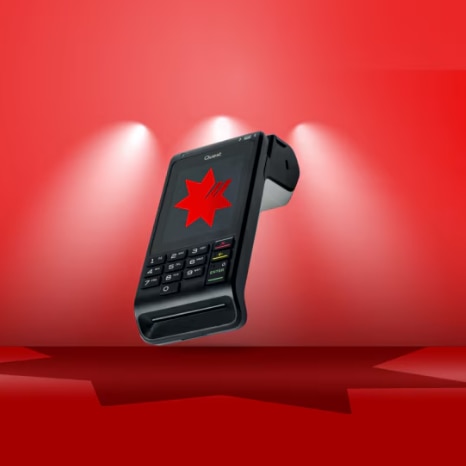
Interchange fees may drop
Interchange is a major card acceptance cost charged by card schemes and included in your merchant service fees. From 1 October 2026, lower domestic interchange fee caps set by the RBA may reduce card acceptance costs for many businesses. Lower caps for foreign-issued card interchange fees will also apply from 1 April 2027.
See the new interchange rates
Increased reporting transparency
Now there’ll be no guesswork. From 30 October 2026, all the major designated card schemes (Visa, Mastercard and eftpos) and large acquirers, like NAB, must publish their average merchant service fees quarterly. You'll also get more information on your statement, including information by domestic versus foreign-issued cards and consumer versus commercial card transactions. This means reviewing payment providers and making more informed decisions for your business will become easier.
Learn about changes to your NAB statement (PDF, 984KB)
Key timings to observe
| Now | Current rules apply. You can continue to surcharge as normal. |
|---|---|
| From 1 Sep 2026 | NAB begins updating terminals and gateways. Keep your terminal switched on and securely stored overnight (12.00am to 6.00am AEST/AEDT) to receive software and configuration updates. |
| 1 Oct 2026 | Surcharging ends. Businesses can no longer apply a surcharge across accepted eftpos, Mastercard, Visa, Amex and UnionPay International card transactions. Lower domestic interchange caps take effect. |
| 1 Apr 2027 | A cap on foreign card interchange begins. This happens alongside further transparency measures and easier-to-read merchant statements. |
What it means for your business
The impact depends on whether you surcharge today.
If you don't surcharge:
Very little changes at your checkout.
If you do surcharge:
You'll need to stop by 1 October 2026, in line with the scheme and regulatory changes.
However, the cost of accepting cards doesn't disappear – it simply moves from your customer to your business.
For this, you’ll need to commercially revisit your pricing and manage any remaining card acceptance costs into your pricing. You may choose to absorb the cost, build it into your advertised pricing, or lower your cost of acceptance by routing your payments through the lowest-cost network where eligible. Alternatively, you can also use a combination of these approaches. While card surcharges will no longer be permitted, businesses will still need to pay merchant service fees, terminal rental fees, and other payment-related charges associated with accepting card payments. These merchant fees cover NAB’s and card scheme costs for services used to facilitate card payments and are separate from surcharges charged to cardholders.
One thing to be careful of is that renaming a surcharge as an ‘admin fee’, ‘service fee’ or ‘card fee’ does not make it compliant. A fee applied because a customer is paying by card is a surcharge, and presenting it otherwise risks breaching both your merchant agreement with us and Australian Consumer Law.
Why it's changing
The RBA's recent 18-month review including 250 written submissions and 150 stakeholder meetings found that the way Australians pay has changed fundamentally over the past two decades, but the rules haven't kept pace. The findings were:
Taken together, these findings have highlighted the need for payment reforms that make card payments simpler, more transparent and aligned to the way Australians pay today.
Read the RBA’s Conclusion Paper
Next steps
Preparing early gives you time to make informed decisions on your own terms, rather than rushing changes close to the deadline.
Before 1 October 2026
Review and adjust your pricing
- Consider how your business will manage card acceptance costs once surcharging is removed. Understanding your true cost of acceptance can help you decide whether to absorb these costs, incorporate them into your pricing, or explore opportunities to reduce payment costs.
- We recommend finalising your approach by the end of August, as many banks and payment providers will begin rolling out changes to payment facilities ahead of 1 October 2026.
Update your POS and payment systems
As a business, you’ll need to look beyond just your payment terminal and review every place a surcharge may currently be applied.
This includes:
- Payment terminals and POS settings
- Online checkout experiences
- Payment gateways and recurring billing arrangements
- Booking platforms and invoicing solutions
- Any payment tools that currently apply a surcharge
If you use third-party providers, such as non-NAB terminals, gateways or POS systems, check what changes are required before 1 October 2026 and whether your current payment arrangements continue to meet your business needs.
Check signage and customer communications
Review and update any customer-facing materials that reference card surcharges.
This may include:
- Website content
- Terms and conditions
- FAQs
- Online checkout messaging
- Invoices and receipts
- Menus and pricing displays
- Store signage and customer communications
Making these updates early can help create a consistent customer experience and will minimise confusion when the changes take effect.
Ensure staff readiness
It’s important to brief your internal teams and customer-facing staff so that they understand what's changing and can confidently answer questions.
Consider preparing your team to:
- Explain why surcharging is ending
- Respond consistently to customer enquiries
- Understand any pricing or process changes
- Support customers during the transition
It's also a good opportunity to review internal reporting, reconciliation and payment processes to ensure your business is ready for the changes.
From 1 October 2026
Why it's important to comply
From 1 October, the ban is enforced through the card scheme rules and your merchant agreement with NAB. Continuing to surcharge would put you in breach of your agreement. Non-compliance would also mean reputational risk, negative customer sentiment as well as loss of business to competitors that comply with the surcharging ban. Separately, the Australian Competition and Consumer Commission (ACCC) continues to enforce the rules against excessive surcharging, and Australian Consumer Law applies to how any fee is presented.
Exceptions apply to some merchants
Merchants may only apply a surcharge where it is expressly permitted under applicable law, regulation or a card network’s rules. Merchants are responsible for determining whether any such permission applies to them (including obtaining appropriate advice where required) and for complying with all applicable requirements.
NAB will be removing surcharge functionality from its merchant facilities as part of the changes to card payment surcharging. Where a merchant believes it is legally permitted to apply a surcharge, the merchant will need to make its own arrangements and should not rely on NAB merchant facilities to do so.
Your partner for payments, we’re here to help
We're committed to supporting you to make this change as simple as possible.
System and software updates handled for you
To help prepare your business for the removal of surcharging from 1 October 2026, we’re updating all NAB payment facilities ahead of the deadline. Select your payment solution to understand what's changing, key rollout dates and whether you need to do anything.
1. For terminal and app-based payment facilities
We're currently working to smoothly remove surcharging functionality across all our payment terminals and app payment solutions.
-
- Keep your terminal powered on overnight and connected to the network between now and 31 August 2026 to receive software updates. If it's offline, the update will be applied automatically when it reconnects in the morning.
- Once the software update has been completed on your device, surcharging functionality will be automatically disabled in the final week of September 2026. Updates will typically be installed overnight to minimise disruption to business operations.
- There will be no on-screen notification confirming the change. Once the update has been applied, surcharge functionality will no longer be available in the terminal settings.
-
- NAB’s Quest Terminal fleet will start receiving updated software in August 2026 in readiness for the disablement of surcharging.
- Merchants will see a screensaver QR code message on their Quest terminal with key information appearing with the new software update.
- Once the software updates are complete, surcharging configurations will be rolled out between 1 to 30 September 2026 whereby any existing surcharge settings will be reset to zero, and the ability to apply a surcharge on transactions will be removed. In specific, the ‘View Surcharges’ button on the payment screen will no longer be visible confirming that surcharging has been switched off.
- Due to the staggered rollout, merchants with multiple terminals may experience updates at different times.
-
- NAB’s Ingenico terminal fleet will start receiving updated software in July 2026 in readiness for the disablement of surcharging.
- Merchants will see a screensaver QR code message on their Ingenico terminal with key information appearing with the new software update.
- Surcharging disablement will begin rolling out progressively between 1 to 30 September 2026 across the Ingenico terminal fleet.
- Due to the staggered rollout, merchants with multiple terminals may experience updates at different times.
- Once updated, a new red ‘Surcharging Disabled’ banner will appear on the terminal screen, confirming surcharging has been successfully switched off.
-
- An automatic update to the NAB Easy Tap Android app will remove surcharging functionality ahead on 30 September 2026.
- Once updated, the option to enable or apply surcharging through the app will no longer appear within the app.
- If the update has not occurred by 1 October 2026, you will be prompted to update your NAB Easy Tap app before you can start transacting.
- Any reminders or updates related to surcharging will be delivered through the Easy Tap app.
Here’s what you need to do if you are using a payment terminal facility: There’s no manual setting you need to switch off. Simply keep your device switched on and connected to receive software updates that will disable surcharging. If your terminal has been inactive or offline, it should update automatically once it reconnects.
If you have NAB Easy Tap: Simply ensure your Easy Tap app is updated, when prompted.
2. For online and eCommerce payments
We’ll also be disabling surcharging across our various NAB Gateway and Transact payment solutions.
-
- Surcharge functionality for NAB Gateway will be disabled on 30 September 2026.
- The Virtual Terminal surcharge field will be removed, meaning merchants will no longer be able to manually add surcharges to transactions and the Differential Fee module will be disabled from the NAB Gateway Portal to ensure that all existing surcharge rules can’t be applied.
- Post the update, surcharge functionality will no longer be available, including within virtual terminal and integrated payment flows. You will be prompted with email communications advising of upcoming changes.
-
- Surcharging will be removed through a single platform-wide update on 30 September 2026.
- Post the update, surcharge functionality will no longer be available, including within virtual terminal and integrated payment flows. You will be prompted with email communications advising of upcoming changes.
What you need to do: For most merchants, no action is required. If you use the NAB Transact or NAB Gateway API to apply surcharges or have recurring payment arrangements that include a surcharge, you may need to update these before 1 October 2026. We also recommend testing your payment flows and confirming any third-party integrations are ready to support surcharge-free transactions. Please review and update any customer-facing materials that reference card surcharges.
3. Using a third-party payment provider?
If your business uses a third-party payment provider, software vendor or integrated payment solution, rollout timings and requirements may vary.
Contact your provider directly to understand what changes they're making to prepare for the new surcharging rules and whether any action is required on your side.
Other ways we’re supporting you
Stay informed with our webinar
Watch our expert-led webinar to understand what's changing, what it means for your business, and the practical steps you can take now to prepare for 1 October 2026.
Updates delivered directly to you
Your merchant statements will carry all relevant surcharging messages with updates around revised interchange fees and NAB pricing along with key dates. Keep an eye out for these communications as they'll help you prepare for 1 October 2026.
Need to speak to us?
Our Relationship Managers and Transactional Banking Specialists can help you understand your payment costs, review your merchant setup, and prepare your business for the upcoming changes.
Frequently asked questions
-
A surcharge in the context of card payments is an extra fee charged by a merchant to a consumer for using a particular card to pay for a transaction.
-
Not all fees are affected by the new surcharging rules. The reforms apply specifically to fees charged because a customer chooses to pay by card. Other fees and charges may still be permitted where they relate to a genuine service or business cost rather than the customer's payment method.
Examples include weekend or public holiday surcharges, booking fees, delivery fees, service fees for genuine underlying services.
However, these fees must not be applied solely because a customer is paying by card. If a fee is linked to a customer's choice of payment method, it is considered a surcharge.
-
If you currently apply a surcharge card payments cost, you can continue to do so until 30 September 2026. However, we recommend planning ahead and working with your payment providers well before the deadline to ensure any required changes are implemented in time. From 1 October 2026, card surcharges will no longer be permitted and must be removed across all payment channels, in-store and online.
-
The removal of surcharging means businesses can no longer charge customers an additional fee for paying by card. It does not eliminate the costs associated with accepting card payments. Businesses may still need to pay merchant service fees, terminal rental fees and other payment-related charges to their payment provider. These fees are business operating costs and are separate from customer surcharges.
-
Yes. From 1 October 2026, businesses across Australia will no longer be permitted to apply surcharges on debit, credit and prepaid cards, including eftpos, Mastercard, Visa, American Express and UnionPay International. This applies to both domestic and foreign card payments from Australia made in-store or online.
-
No. From 1 October 2026, surcharging functionality will be removed across all payment card transactions including American Express and UnionPay International transactions.
-
No. From 1 October 2026, businesses will no longer be able to apply card surcharges to domestic or international card transactions. While separate changes to foreign-issued card interchange fees commence on 1 April 2027, businesses are still required to remove all card surcharges by 1 October 2026.
-
Yes. you'll need to review and amend any customer-facing signage that references card surcharges by 30 September 2026. This may include websites, menus, signage, online checkout messaging, terms and conditions, invoices and receipts.
-
For most NAB terminal users, there's very little to do. We'll update eligible NAB terminals automatically starting from 1 September 2026 to support the removal of surcharging.
To ensure updates are received successfully, simply keep your terminal switched on, connected and securely stored overnight to receive software updates. For more information, view system and software updates.
-
We're updating NAB Gateway and NAB Transact ahead of 1 October 2026 to support the removal of surcharging. Where possible, we'll handle these changes automatically.
For most merchants, no action is required. If you use the NAB Transact or NAB Gateway API to apply surcharges or have recurring payment arrangements that include a surcharge, you may need to update these before 1 October 2026. We also recommend testing your payment flows and confirming any third-party integrations are ready to support surcharge-free transactions. Please also review and update any customer-facing materials that reference card surcharges.
-
No. Payments should continue to operate as they do today. To help ensure a smooth transition, keep your terminal switched on and connected so that it can receive the latest software updates.
If you experience any issues, our Merchant Helpdesk is available to support you.
-
New domestic interchange fee caps take effect from 1 October 2026, with foreign-issued card interchange fee caps commencing from 1 April 2027. We are currently reviewing the impact of these reforms on our pricing. If any pricing changes affect your business, we'll let you know in advance through our merchant communications. Any updates will also be reflected in your merchant statements from the effective date.
If you'd like to understand what these changes may mean for your business, speak with your NAB Relationship Manager or Transactional Banking Specialist.
-
View our interchange rates and category terms
-
From 1 October 2026, continuing to surcharge card payments would put you in breach of your Merchant Agreement (PDF, 315KB) with NAB and other businesses potentially causing reputational damage. Fines may also apply.
-
For most businesses, card surcharges will no longer be permitted from 1 October 2026. Merchants may only apply a surcharge where it is expressly permitted under applicable law, regulation or a card network’s rules. Merchants are responsible for determining whether any such permission applies to them (including obtaining appropriate advice where required) and for complying with all applicable requirements.
NAB will be removing surcharge functionality from its merchant facilities as part of the changes to card payment surcharging. Where a merchant believes it is legally permitted to apply a surcharge, the merchant will need to make its own arrangements and should not rely on NAB merchant facilities to do so.
-
Businesses can offer discounts to consumers who pay using a particular payment method discount, but you must ensure consumers are presented with the full price list first. Please refer to the ACCC Price Display for guidance.
-
The RBA has published FAQs to help businesses understand the upcoming payment reforms. Learn more about the RBA’s removal of payment surcharges.
Learn more about the no-surcharge rules effective 1 October 2026 from Australian Payments Network.
Contact us
Contact a transactional banking specialist
Need help with your business banking? Call us on 1300 338 767
Prefer to speak a language other than English? Learn more about our interpreter services.
If you're d/Deaf or have difficulty hearing or speaking on the phone, the National Relay Service can help.
24/7 Terminal support
Call us for terminal support 24/7.
eCommerce and Online support
Call us for NAB Transact support Monday to Friday, 8:00am to 8:00pm (AEST/AEDT)
Call us for NAB Gateway support Monday to Friday, 8:00am to 6:00pm (AEST/AEDT).
Important information
Apologies but the Important Information section you are trying to view is not displaying properly at the moment. Please refresh the page or try again later.